Who is the pilot of your mind?

2012 January 22
tags:
by admin

Two excerpts from “Your Mind Is Your Religion,” reprinted by Tricycle from :Make Your Mind an Ocean: Aspects of Buddhist Psychology” (1999). This is a rich piece for reflection. Read the longer excerpt here:

One day the world looks so beautiful; the next day it looks terrible. How can you say that? Scientifically, it’s impossible that the world can change so radically. It’s your mind that causes these appearances. This is not religious dogma; your up and down is not religious dogma. I’m not talking about religion; I’m talking about the way you lead your daily life, which is what sends you up and down. Other people and your environment don’t change radically; it’s your mind. I hope you understand that. Similarly, one person thinks that the world is beautiful and people are wonderful and kind, while another thinks that everything and everyone is horrible. Who is right? How do you explain that scientifically? It’s just their individual mind’s projection on the sense world. You think, “Today is like this; tomorrow is like that; this man is like this; that woman is like that.” But where is that absolutely fixed, forever-beautiful woman? Who is that absolutely forever-handsome man? They are nonexistent-they are simply creations of your own mind …

No matter which of the many world religions we consider, their interpretation of God or Buddha and so forth is simply words and mind; these two alone. Therefore, words don’t matter so much. What you have to realize is that everything-good and bad, every philosophy and doctrine-comes from mind. The mind is very powerful. Therefore, it requires firm guidance. A powerful jet plane needs a good pilot; the pilot of your mind should be the wisdom that understands its nature. In that way, you can direct your powerful mental energy to benefit your life instead of letting it run about uncontrollably like a mad elephant, destroying yourself and others. | READ ON

The Bonfire of Awareness

2012 January 7
tags:
by admin

“There is nothing that cannot be tossed into the bonfire of awareness.” ~ Rick Bass

The ways of proclaiming The Mind all vary …

2012 January 1
tags:
by admin

“The ways of proclaiming The Mind all vary, But the same heavenly truth can be seen in each and every one.”

~ Ikkyu (1394-1481)
Courtesy of the invaluable dailyzen.com

P.S: Ikkyu was quite a character and an inflential one in Zen

For Whom is This Dhamma?

2011 December 27
tags:
by admin

For Whom is This Dhamma?

1. This Dhamma is for one who wants little, not for one who wants too much.
2. This Dhamma is for one who is contented, not for one who is discontented.
3. This Dhamma is for one who loves seclusion, not for one who loves society.
4. This Dhamma is for one who is energetic, not for one who is lazy.
5. This Dhamma is for one who is mindful, not for one who is unmindful.
6. This Dhamma is for one who is composed, not for one who is restless.
7. This Dhamma is for one who is wise, not for one who is unwise.
8. This Dhamma is for one who delights in freedom form impediments, not for one who delights in impediments.

(Anguttara Nikaya, Chapter VIII)

Meditation is peace, sadness, joy, anger, sleepiness etc.

2011 December 19
tags:
by admin

“Meditation is never one thing; you’ll experience moments of peace, moments of sadness, moments of joy, moments of anger, moments of sleepiness. The terrain changes constantly, but we tend to solidify it around the negative: “This painful experience is going to last the rest of my life.” The tendency to fixate on the negative is something we can approach mindfully; we can notice it, name it, observe it, test it, and dispel it, using the skills we learn in practice.”

~ Sharon Salzberg, “Sticking with It”

Sitting down, settling down, instead of running around

2011 December 13
tags:
by admin

“We need to talk about a balance. Frankly, I think Asian monastics probably spend too much time sitting in meditation looking inward, and not enough time outdoors. They have to go out, as Shakyamuni did, and find out how people are living in society. But in the West, it’s the opposite problem. People spend all their time in the outer world. They’ve been successful in business, in their professional lives, but they have no relief from the stress of their lives. They need to sit down and settle the body and mind, instead of always running around feeling agitated inside.”

- Samu Sunim
“Buddha in the Market: An Interview with Korean Zen Master Samu Sunim”
Read the entire article in the Tricycle Wisdom Collection

What does not embody the Dharma?

2011 December 10
tags:
by admin

“The nightingale singing among the flowers warbles Marvelous Law; all the birds that soar in the sky and even the frogs croaking in the water never cease chanting the Dharma. The clang of the evening bell echoes impermanence of everything; and the sound of the bell at daybreak reverberates with the message of appearance and disappearance of all elements. Flower petals flying and leaves falling before the wind disclose the perpetual changeability of karmic fortunes. There is not a single thing that does not embody the Dharma.”

~ Shosan (1579-1655)
quote from the invaluable dailyzen.com

Let go of all your previous imaginings…

2011 November 12
tags:
by admin

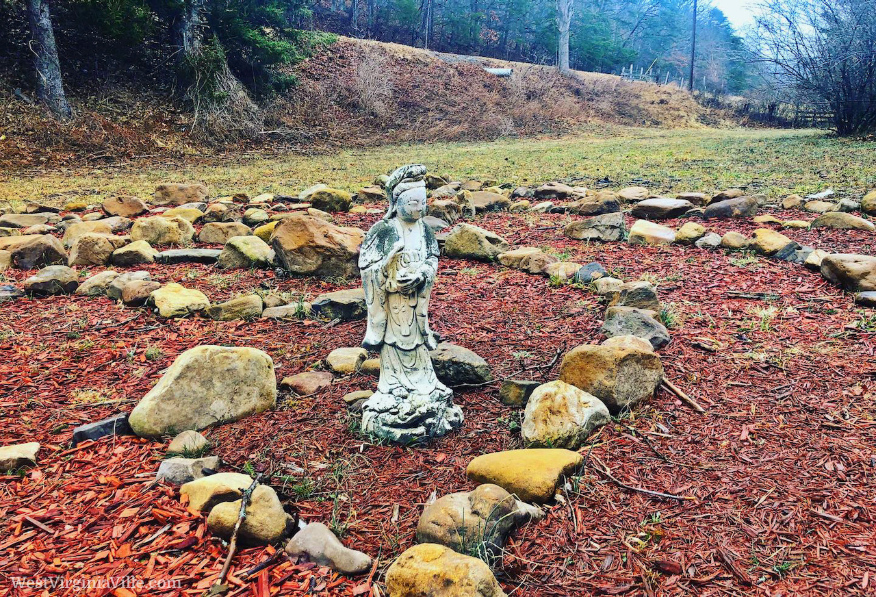
Tucker County, W.Va., Fall 2011 : treated photograph : westvirginiaville.com


“Let go of all your previous imaginings, opinions, interpretations, worldly knowledge, intellectualism, egotism, and competitiveness; become like a dead tree, like cold ashes. When you reach the point where feelings are ended, views are gone, and your mind is clean and naked, you open up to Zen realization.

After that it is also necessary to develop consistency, keeping the mind pure and free from adulteration at all times. If there is the slightest fluctuation, there is no hope of transcending the world.

Cut through resolutely, and then your state will be peaceful. When you cannot be included in any stage, whether of sages or of ordinary people, then you are like a bird freed from its cage.”


Yuan wu
(1063-1135), courtesy of dailyzen.com


Monastery Nights: The Good Friend

2011 November 11

MonasteryNights

Ask not for whom the gong tolls ... | The Bhavana gong | westvirginiaville.com photo


“Monastery Nights” is an Occasional Memoir of Visits to the

Bhavana Society Buddhist Monastery in West Virginia
and Encounters with Abbot Bhante Gunaratana

and other teachers.

Chapter 1: The Karma of Moths
Chapter 2: The Good Friend

By Douglas Imbrogno | October 2011 | westvirginiaville.com

This memoir will attempt no authoritative explication of jhana meditation, a flavor of Buddhist meditation less known in the West than the more commonly taught insight or vipassana meditation. For more on jhanic meditation, I direct you to several writings by Bhante Gunaratana (chief among them, “The Path of Serenity and Insight”).

I have a more circumscribed, minor aim: to describe a bit of the scenery of an Appalachian Buddhist retreat, some of its feel and the feelings that come with it. I hope also to share the significance of a place that has become significant to me, as it has to so many people since Bhavana opened in the late 1980s, tucked back in the hills near the West Virginia-Virginia border.

←∞→

Bhavana is a Therevadan Buddhist monastery. For those unfamiliar with the varieties of Buddhism, or who may confuse its tenets with Hinduism, there is no guru in this tradition. Bhavana monks more fill the role of the kalyanamitta, the “good friend” or spiritual friend, one who gives guidance rooted in the monk’s own practice and experience. Bhante G, as he is known across the globe, has for decades been just such an essential spiritual friend to me and countless others.

I first arrived at Bhavana in 1989 to write a newspaper profile about its opening. “Walking the Forest Path,” was the headline, a story that earned me one of the few national journalism awards I’ve won. Bhavana, though, turned out to be the spiritual conversation and practice center I’d long been looking for ever since I retired as a Roman Catholic in my late teens. So, I kept coming back.

Thanks to the tutelage of Bhante G, and other monks and nuns, I’ve had long, if often erratically pursued, experience with vipassana or mindfulness meditation. I was less familiar with the highly focused concentration practice of the jhanas. The standard passage describing the attainment of the First Jhana notes that it is entered upon by one who is “secluded from sense pleasures, secluded from unwholesome states of mind,” as Bhante G quotes in his 1988 pamphlet “The Jhanas in Therevada Buddhist Meditation” (Wheel Publication No. 351-353, Buddhist Publication Society, Sri Lanka).

A classic Buddhist work, the Visuddhimagga, explains that there are several kinds of seclusion essential to the attainment of jhanas. I was taking the first step by getting myself to this lamp-lit hut at the base of Great North Mountain in the West Virginia outback: bodily seclusion or kayaviveka. As Bhante G describes it in his pamphlet, this necessary seclusion means “physical withdrawal from active social engagement into a condition of solitude for the purpose of devoting time and energy to spiritual development.”

Yep, that would about sum it up. I’d been out of sorts for months. Not clinically bi-polar — more roller coaster-polar. I was in a rut of racing through the days and weeks, exhilarating highs confoundingly followed by abject lows. If my moods had had their own meteorologist, the weather report would have been regular squalls of anger and whats-the-point-anyway despair followed by thunderstorms of self-pity and flash floods of fecklessness.

You might call that modern life. Or maybe the human condition. But when it goes on too long and frequently, I call it ‘bleck.’

As in: Bleck.

←∞→ read more…

MonasteryNights: The Karma of Moths

2011 November 11

MonasteryNights

“Monastery Nights” is an Occasional Memoir of Visits to the
Bhavana Society Buddhist Monastery in West Virginia
and Encounters with Abbot Bhante Gunaratana

and other teachers.

Chapter 1: The Karma of Moths
Chapter 2: The Good Friend

By Douglas Imbrogno | October 2011 | westvirginiaville.com

My bed is hard. Sitting on its edge, the thought comes to me that this is the most perfectly perfect bed for a seven-day Buddhist meditation retreat. Simple. A blue mattress, little thicker than a kitchen chair cushion, covers the handmade plywood bed in a corner of my kuti — monastery-speak for a one-room hut in the woods.

A stack of blankets sits on the floor near a small gas wall heater. A wood Buddha, big as a cat seated on its haunches, meditates on a high corner shelf, its green-gold robes flaking with age. The cabin’s exterior is painted burnt orange like the several dozen other kutis scattered about the monastery’s 60-some acres. Mine — named ‘Viriya’ kuti — rests one stop past the compost heap, a short stroll up a gravel path from the Bhavana Society dining and meditation hall. I whiff the compost’s fruity aroma on the kuti’s screened-in porch, where I first sit on a low bench to doff my shoes before entering.

The forest drips with the last of a daylong rain soaking the Hampshire County hills. I had arrived last of all after a six-hour dash across the ever-rolling West Virginia landscape. I pull up to find a new green street sign on a pole at the turn-in to the property along Back Creek Road:

‘Meditation Trl,’ the sign says.

Smiling, I ease my car into one of only two open slots in the blacktop lot. A chance for a week-long retreat on jhana meditation with Bhavana’s 84-year-old abbot — who has spent decades studying and practicing this form of one-pointed concentration meditation — has jammed the place.

All 40-odd retreatants — men on the left, women on the right — already sit on fat maroon cushions or in chairs along the walls in the peaked-roof meditation hall. I ditch my shoes and enter the darkened space well after 8 p.m. I step quietly as possible. Mid-room, I kneel and dip my forehead to the floor, three times, to a larger-than-life Buddha statue seated on high at the end of the chamber. Below it, facing us on a low, cushioned wood dais, sits Bhavana’s founding abbot, Bhante Gunaratana.

I arrange myself on a cushion, trying not to be a bother the guy meditating on a zabuton a foot in front of mine. Or the fellow two feet behind. To my ears in the quiet hall, all my rustling and rearranging sounds like someone breakdancing in a library. read more…

Video: On Trying too hard to meditate

2011 November 4
by admin

Bhikku Piyadhammo, a monk friend who resided recently at the Bhavana Society, told me about a rich collection of Buddhist-themed videos that he maintains on a YouTube channel called “Dhammatube.”  The channel, which features pithy short videos on useful topics to anyone interested in Buddhist practice, has a series of short interviews with a thoroughly charming young monk named Tan Dtoon.  I like what a commentator to the video above said about him:

I like Tan Dtoon because he doesn’t seem lofty and rehearsed. There’s wisdom in his honesty and spontaneity…..even if he’s searching for the answer himself. There’s something about knowing yourself without putting on an act. I find that more impressive then pretending you have authority.

In this video, the monk talks about what Ajahn Chah and other monks have had to say about trying too hard in meditation, always a good topic to consider for anyone who has ever tried to keep a regular meditation practice going. We’ll be e-posting more Dhammatube videos.


“There’s a Light”

2011 February 4
by admin

This is a bit off the beaten path for the usual kind of post here. But this is a music video much in spirit of meditation practice, in which we seek to awaken to all the light that’s already there in us, hidden by our cloudy minds. The song is by The IONS, a music-theater troupe of mine that’s the house band of the Web Theater of WestVirginiaVille.com. There are images of the Bhavana Society Buddhist monastery in the hills of Hampshire County and shots of Bhavana abbot Bhante Gunaratana and bhantes Rahula and Piyadhammo, on White Cliff on Great North Mountain in the Allegheny highlands. (That last sentence is the first time I had to confront the conundrum: What is the plural of ‘bhante,’ a word akin to ‘reverend’?) Except for the opening images by jumpy ‘bike-cam’ (actually, me holding my iPhone, camera forward) from the Washington Mall in DC, all the other ones are from the hills, streets, parties, interstates and backroads of West Virginia.

– by douglas imbrogno

Introduction to Meditation Retreat, June 24-29, 2011

2011 February 4
by admin

We’ve had a lot of new faces recently at The Meditation Circle, including many folks new to Buddhist meditation practice. If you’re a newcomer with a strong interest in deepening your  practice, we highly recommend you check out the Introduction to Meditation retreat at the Bhavana Society Buddhist monastery and retreat center in Hampshire County, W.Va., near Wardensville. This 5-night retreat takes place Friday, June 24 to  Wednesday, June 29, 2011, and will be led by the Buddhist monk Ven. Olande Ananda. IMPORTANT NOTE: Alas, after checking this out, I note that the retreat is currently full for men, but it is possible to get on a waiting list. There is still space for women.  If interested, sign up soon as may be. Bhavana retreats fill up quickly as you can see here at their full 2011 retreat schedule. The Bhavana website describes the Introduction to Meditation retreat this way:

These retreats are for those new to meditation or who want to learn about meditation. There will be instruction and assistance with sitting and walking meditation and a brief introduction to Buddhism. The schedule is less rigorous, and guided meditations will be given. People of all faiths are welcome to come to any of our retreats.  You should be aware, though, that the Bhavana Society is a Buddhist Monastery and you may see customs and traditions you are not familiar with.  Feel free to ask questions.  We want you to feel comfortable here.  We only ask that you behave in a respectful manner.

Striking the bell of mindfulness

2011 January 27
by admin


Sister Dang Nhiem is a nun at Deer Park Monastery in Escondido, CA. She practices Zen Buddhism in the tradition of Thich Nhat Hanh. Sister D shows us the proper way to invite the sound of the bell. She also teaches us how to cultivate that peacefulness when we hear noises that might otherwise cause stress.

Dhamma talk: Introduction to breath meditation

2011 January 23
by admin

Listen to Dhamma talk on meditation

The downloadbale mp3 link above will fire up a wonderful Dhamma talk introducing breath meditation by Bhante Sujato, of Santi Forest Monastery in Bundanoon, Sydney in Australia’s Southern Highlands. This is actually talk no. 6 in a series of Dhamma talks the Australian monk gave on the practice of metta or loving-kindness meditation, taught in a methodical fashion by a monk in Bangkok with whom Bhante Sujato has studied. Along the way of introducing this metta meditation practice, Bhante Sujato undertakes an illuminating survey of the different kinds and methods of Buddhist meditation. In this talk, he gives a pretty rich introduction to breath-centered meditation.

As always, the Meditation Circle encourages people to listen to a variety of Buddhist teachers on such core practices as breath meditation and find which teachers and specific methods of teaching work best for you, rooted in the basic fundamentals of how the Buddha taught meditation. For instance, I find the counting technique Bhante Sujato suggests here to be a little overly complex for my taste, although since listening to this talk I have been experimenting with it.

In addition, this may well be for some of you a first encounter with a Western Buddhist teacher who speaks of the nimita, which has been described as “a visual light effect that is a byproduct of the mind unifying.” For serious practitioners, committed to pursuing meditation practice until the day they die, the study and understanding of such matters really requires working with a teacher deeply grounded in Buddhist teachings. Which is to say, don’t ask us Meditation Circle facilitators to get into such weighty topics – we’re just here to point in various directions and unlock the door for our weekly Tuesday meditation!

Below are two of Bhante Sujato’s introductory talks on metta in that series, used with permission of the monastery where he teaches. I encourage you to seek out this and other talks by this very interesting and informed Western monk who trained with Ajahn Brahm and who has a colorful past as a performer. Here is his blog, called simply ‘Sujato’s Blog.’

~ Douglas Imbrogno

TALK 1: Bhante Sujato undertakes an illuminating survey of the different kinds and methods of Buddhist meditation. The talk heard here is a shortened version — I edited the talk down a bit to fit into manageable size for listening to at the Meditation Circle.

TALK 2: In this guided meditation, Bhante Sujato leads a 30-minute meditation on the basics of working with the attention as you first begin to sit.